


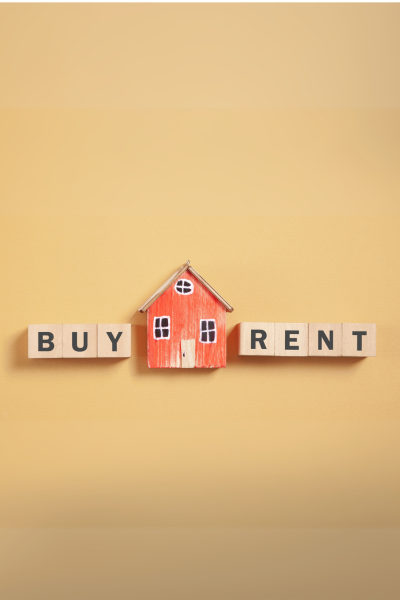


Thinking about buying? Be sure to include these five items in your calculations. Homeownership may be a goal for many, but it’s not the right fit for some.
Renters account for 37 percent of all households in America — or just over 43.7 million homes, up more than 6.9 million since 2005. Even still, more than half of millennial and Gen Z renters consider buying, with 18 percent seriously considering it.
Both lifestyles afford their fair share of pros and cons. So, before you meet with a real estate agent, consider these five costs homeowners pay that renters don’t.
1. Property taxes
As long as you own a home, you’ll pay property taxes. Factor this expense into the equation from the get-go to avoid surprises down the road. The property tax rates vary among states, so try a mortgage calculator to estimate costs in your area.
2. Homeowners Insurance
Homeowners insurance protects you against losses and damage to your home caused by perils such as fires, storms, or burglary. It also covers legal costs if someone is injured in your home or on your property. Homeowners insurance is almost always required in order to get a home loan. If you intend to purchase a condo, you’ll need a condo insurance policy — separate from traditional homeowner’s insurance.
3. Maintenance & Repairs
Don’t forget about those small repairs that you won’t be calling your landlord about anymore. Notice a tear in your window screen? Can’t get your toilet to stop running? What about those burned-out light bulbs in your hallway? You get the idea. Maintenance costs can add additional to the typical homeowner’s annual bill. Of course, the amount increases as your home ages. And don’t forget about repairs. Conventional water heaters last about a decade, air conditioning units don’t typically last much longer than 15 years, and an asphalt shingle roof won’t serve you too well after 20 years.
4. HOA fees
Sure, that monthly mortgage payment seems affordable, but don’t forget to take homeowners association (HOA) fees into account. They usually fund perks like your fitness center, neighborhood landscaping, community pool and other common areas. Such amenities are usually covered as a renter, but when you own your home, you’re paying for these luxuries on top of your mortgage payment.
5. Utilities
When you’re renting, it’s common for your apartment or landlord to cover some costs. When you own your home, you’re in charge of covering it all — water, electric, gas, internet, and cable.
Depending on your lifestyle, location, and financial situation, renting might be more cost-effective in the end. As long as you crunch the numbers and factor in these costs, you’ll make the right choice for your needs!